
Is Shea Butter The Top Natural Cosmetic Ingredient Now?
What Is Shea Butter?Shea butteris an ivory-to-yellowish solid fat native to West Africa, where it has been used for centuries in traditional skincare and medicine. Unlike many plant oils that are liquid at room temperature, shea butter’s unique fatty acid profile gives it a smooth, buttery texture that melts easily upon contact with human skin. Its melting point of 32–35°C aligns perfectly with human body temperature, making it highly skin-compatible and easy to absorb. Core Chemical ComponentsScientific analysis via GC-MS and lipid profiling has identified the key components that drive its cosmetic efficacy. The core composition consists of 85–90% fatty acids and 5–10% unsaponifiable fraction, the latter being the “active powerhouse” of its benefits. | 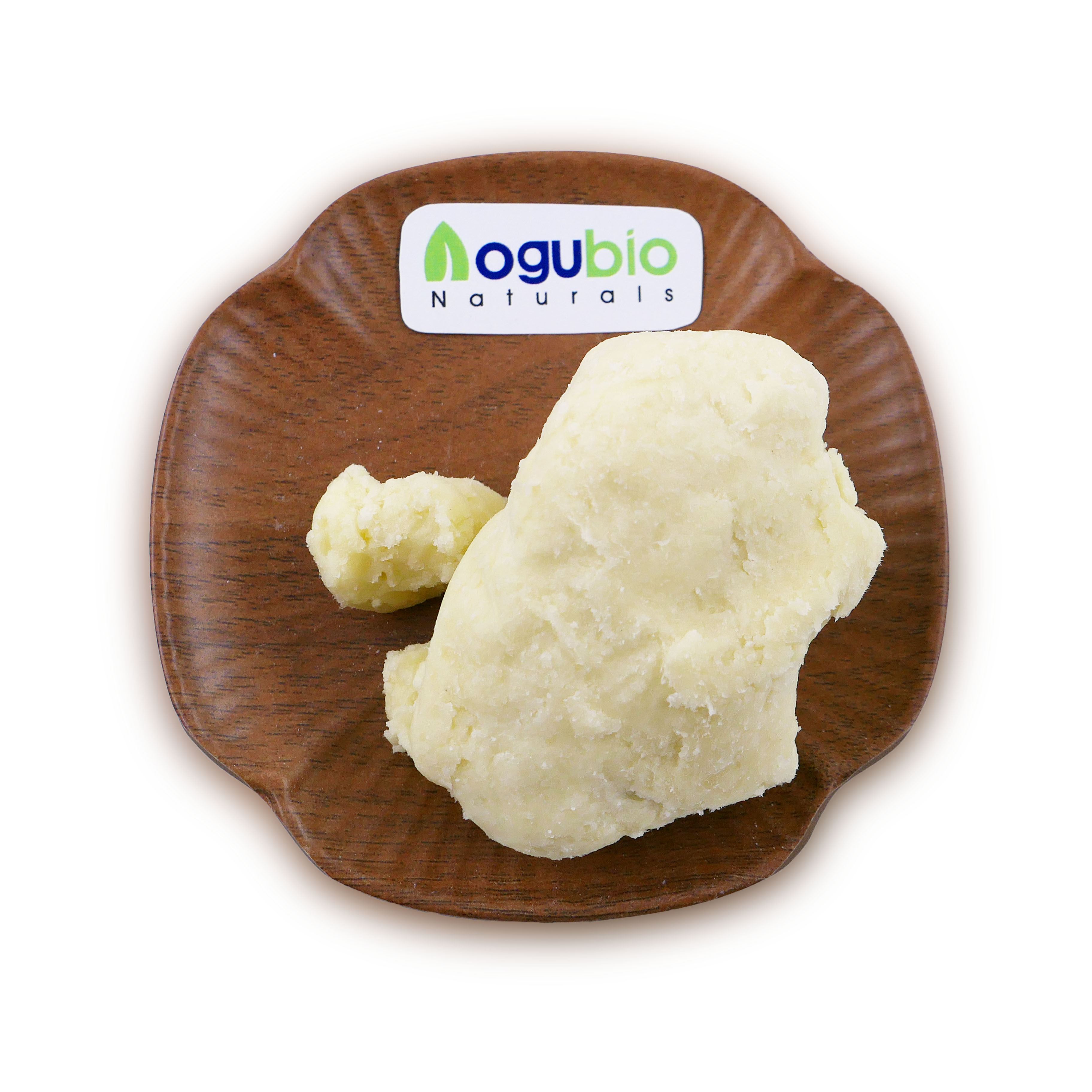 |
Fatty Acid Profile
The fatty acid content is the foundation of shea butter’s moisturizing properties. It includes oleic acid, a monounsaturated omega-9 fatty acid that penetrates the skin’s outer layer for deep hydration and improved elasticity; stearic acid, a saturated fatty acid that forms a protective, breathable barrier to lock in moisture and prevent transepidermal water loss; linoleic acid, an omega-6 essential fatty acid that supports skin barrier function and reduces inflammation; and palmitic acid, which enhances skin softness and formulation stability.
Unsaponifiable Fraction: The Active Powerhouse
The unsaponifiable fraction contains the most potent bioactive compounds. This includes triterpenes like lupeol and amyrins, which are powerful anti-inflammatory and antioxidant compounds; vitamins A, D, E, and F, with vitamin E neutralizing free radicals and vitamin A supporting collagen synthesis; phytosterols that repair the skin barrier and reduce redness; and cinnamic acid esters that provide UV protection and anti-inflammatory benefits.
Refined vs. Unrefined Shea Butter
A 2025 study in the Journal of Cosmetic Dermatology confirmed that unrefined shea butter retains 90% of these bioactive compounds, while refined versions lose up to 75% due to high heat and chemical processing. This highlights the importance of choosing unrefined varieties for maximum efficacy.
Key Advantages of Shea Butter for Cosmetics
- Superior Moisturization & Barrier Repair
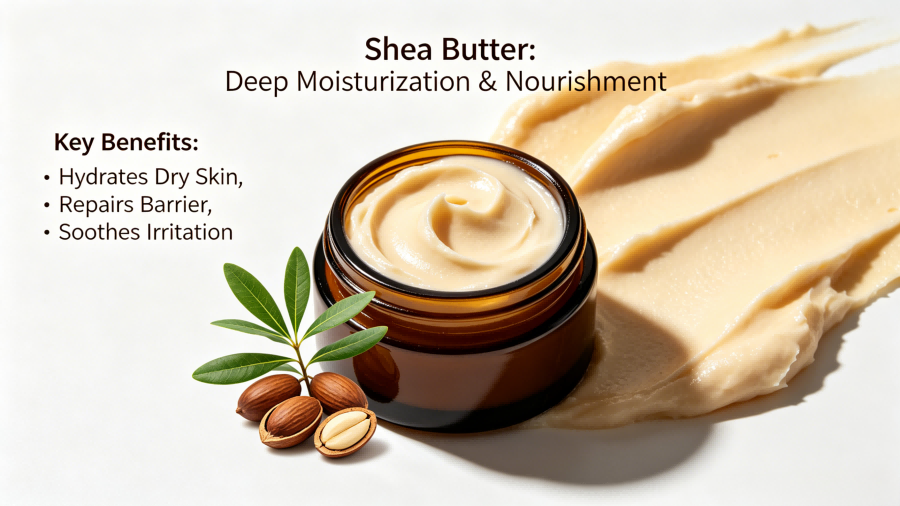
Its superior moisturization and barrier repair capabilities make it a top choice for addressing dry, compromised skin, a global skincare concern. A 2025 in vitro study published in the PISRT Journal of Cosmetic Science tested shea butter’s effects on human skin models and found a 37.8% reduction in TEWL within 24 hours, a 58% increase in skin hydration, and a 33% increase in skin impedance, indicating a stronger, more resilient barrier. Another clinical trial in the International Journal of Cosmetic Science (2024) found that participants with dry skin who used shea butter cream for 4 weeks experienced a 42% improvement in skin smoothness compared to a control group using petroleum jelly.
- Powerful Anti-Inflammatory & Soothing Properties
Beyond hydration, shea butter offers powerful anti-inflammatory and soothing properties, targeting inflammation linked to acne, eczema, rosacea, and premature aging. A 2012 study in the Journal of Complementary and Integrative Medicine showed that shea butter extract significantly reduced inflammatory markers like TNF-α, IL-1β, and IL-12 by suppressing the NF-κB pathway, a key driver of skin inflammation.
- Antioxidant & Anti-Aging Benefits
Its antioxidant and anti-aging benefits are equally impressive, with vitamin E and catechins neutralizing free radicals from environmental stressors like UV rays and pollution. Research in the American Journal of Life Sciences (2023) found shea butter’s catechins have antioxidant activity comparable to green tea extracts, while an in vitro study in Skin Pharmacology and Physiology (2024) showed that shea butter triterpenes increased type I collagen production in dermal fibroblasts by 30% while reducing MMP-1, a collagen-degrading enzyme, by 25%.
- Exceptional Safety Profile
Importantly, shea butter has an exceptional safety profile: the International Journal of Toxicology (2022) confirmed it is non-irritating, non-sensitizing, and non-comedogenic, making it suitable for all skin types, including sensitive and acne-prone skin, as well as all ages from infants to the elderly.
Cosmetic Applications of Shea Butter
- Facial Skincare Applications
In facial skincare, it is a key ingredient in moisturizers and creams, ideal for dry, combination, and sensitive skin; a 2024 study in the Journal of Drugs in Dermatology found shea butter-based creams improved skin hydration and barrier function in 89% of participants with sensitive skin. It is also widely used in anti-aging serums and lotions, where its collagen-boosting and antioxidant properties reduce fine lines and wrinkles—a 2023 clinical trial showed a shea butter serum reduced crow’s feet depth by 18% after 8 weeks. Additionally, it is a first-line natural treatment for eczema and dermatitis, and research in the Journal of Cosmetic Dermatology (2022) found it increased the photostability and in vivo SPF of sunscreen formulations by 20–25%, providing additional UV protection.
- Body Care Applications
In body care, shea butter is a mainstay in body butters and lotions, perfect for targeting dry areas like elbows, knees, and heels; a 2025 study in Skin Research and Technology found shea butter body lotion reduced dryness and flakiness by 65% in 2 weeks. It is also effective for stretch mark prevention and treatment, as its collagen-boosting properties improve skin elasticity— a 2024 clinical trial in the Journal of Cosmetic Dermatology found shea butter reduced stretch mark appearance by 35% after 6 months of consistent use. Furthermore, it accelerates wound healing by promoting keratinocyte migration and fibroblast proliferation, with a 2023 study in Wound Repair and Regeneration finding it shortened wound healing time by 30–40% compared to control treatments.
- Lip Care Applications
In lip care, shea butter is a common ingredient in lip balms and butters, relieving dry, chapped lips and protecting against environmental damage. A 2022 study in the Journal of Cosmetic Science found shea butter lip balm reduced lip dryness by 70% and improved lip smoothness by 55%.
- Haircare Applications
For haircare, it is used in conditioners and hair masks to penetrate the hair shaft, moisturize dry, brittle hair, and reduce breakage. A 2024 study in the International Journal of Trichology found it improved hair moisture content by 40% and reduced split ends by 35%—and as a scalp treatment to soothe dry, itchy scalps and reduce inflammation associated with seborrheic dermatitis.
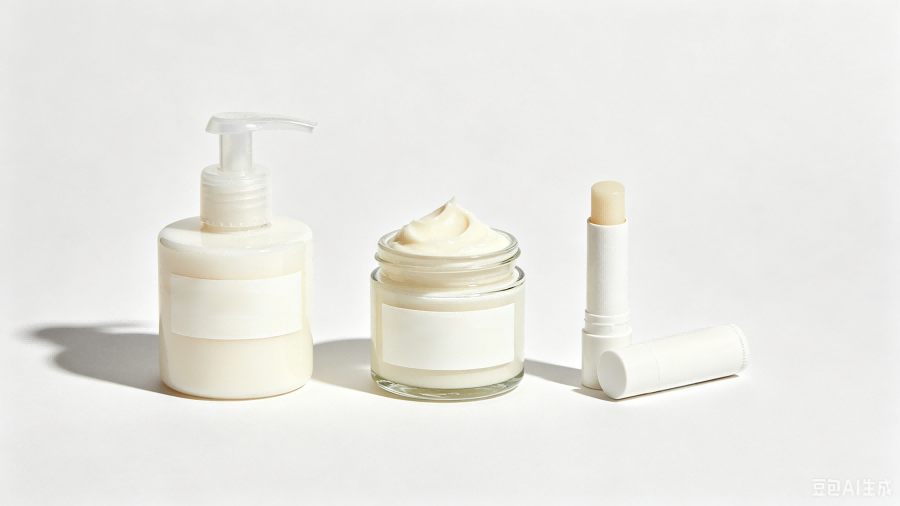
How Shea Butter Compares to Other Natural Cosmetic Ingredients
To determine if shea butter is the top natural cosmetic ingredient, it is essential to compare it to other popular natural options. Coconut oil, while moisturizing and antimicrobial, is highly comedogenic, meaning it can clog pores, and may dry out skin long-term, with limited clinical data supporting its benefits. Argan oil is lightweight and offers anti-aging benefits but is expensive and less effective for very dry skin, with moderate research support. Cocoa butter is moisturizing and firming but has a hard texture and less anti-inflammatory activity, with weak research backing. In contrast, shea butter outperforms these competitors in efficacy, versatility, and safety, with the strongest body of scientific research supporting its benefits. It addresses multiple skin concerns—dryness, inflammation, aging, and sensitivity—whereas many other natural ingredients offer only one or two specific benefits, making it a more well-rounded and reliable choice for cosmetic formulations.
Conclusion: Is Shea Butter the Top Natural Cosmetic Ingredient Now?
Based on its unique chemical composition, research-backed benefits, wide-ranging cosmetic applications, and excellent safety profile, the answer is a resounding yes. Shea butter has earned its place as the top natural cosmetic ingredient in 2026, favored by formulators, dermatologists, and consumers worldwide. Unlike many natural ingredients that offer only limited benefits, shea butter is a multitasking powerhouse that addresses multiple skincare concerns with minimal risk of irritation, making it suitable for a wide range of skin types and ages. Its versatility in formulations allows it to be incorporated into nearly every cosmetic product type, from facial serums to hair masks, reducing the need for synthetic additives and aligning with the growing demand for clean, natural, and sustainable beauty products. As consumers continue to prioritize science-backed, gentle, and effective ingredients, shea butter’s popularity will only continue to rise, solidifying its position as the gold standard of natural cosmetic ingredients. Its long history of traditional use, combined with modern scientific validation, makes it a trusted and reliable choice for anyone seeking high-quality, natural skincare solutions.
Name: Yuki
E-mail: sales02@nahanutri.com
WhatsApp:+8618066950297